The 2025 congress of Les Fleurs de la Mémoire was held in Bayeux (Calvados) on Sunday, March 30, 2025, in the presence of U.S. Consul Mrs. Cintora, Mr. Bolt, Deputy Director of the Colleville Cemetery, Mr. Baudoin (representing the Mayor of Saint-Martin-des-Entrées), Mrs. Jean Pierre (representing the Mayor of Bayeux), Mrs. Fauvel (Departmental Council), Mr. Quétier (President of the Normandy Landings Committee), Mr. Gabriel Lecluze and Mrs. Le Texier (High Council of Memory), and Mr. Serge Néel, President of Les Fleurs de la Mémoire.
Tribute to two historical figures of Bayeux
In his welcome speech, Mr. Néel paid tribute to the memory and career of Mr. Guillaume Mercader, a resistant from Bayeux. A professional cyclist, he became an intelligence agent and helped organize General de Gaulle’s arrival in Bayeux in 1944.
Another key figure from Bayeux, Mr. Raymond Triboulet, was the first sub-prefect of Free France and of Bayeux. From 1945 onwards, he helped develop the June 6 ceremonies, create the Normandy Landings Committee and establish museums.
Opening speeches and annual reports
Opening speeches by Mr. Baudoin and Mrs. Fauvel were followed by a moment of silence while the hymn Remember was played.
After being read aloud, the moral, activity, and financial reports were unanimously approved. The financial results are positive, thanks to increased membership and the free hosting of the 2024 congress. However, maintaining subsidies from the Departmental Councils and municipalities remains essential.

Key Topics and Board Elections
Email delivery issues
Attendees were informed of issues with email delivery: out of 2,600 emails sent, 300 bounced. Members are encouraged to provide a valid and updated email address.
Board of Directors
Seven board members were re-elected. Nadine Trehet and Éric Baledent joined the board. The President warmly thanked Mrs. Janine Lebourgeois, a founding member stepping down, for her loyal commitment to the association.
Intervention by Mr. John Bolt (ABMC)
Mr. Bolt announced the upcoming arrival of a new superintendent at Colleville Cemetery, Mr. Robert Adams. He noted that the site welcomes nearly 2 million visitors annually, which necessitates temporarily closing certain grave plots to protect the grass. However, the plots remain accessible to families and association members wearing an official armband, available at the visitor center.
He emphasized the importance of the Franco-American friendship and thanked the association for its regular and appreciated presence.
Round Table: How Can We Transmit Memory Without Direct Witnesses?
Participants in the round table:
Mr. Jean Quétier, President of the Normandy Landings Committee and responsible for the June 6 commemorations
Mr. Gabriel Lecluze (high school senior), Secretary of the HCM – High Council of Memory
Mrs. Le Texier, Treasurer of the HCM
The High Council of Memory, a student association created on August 15, 2023, currently has 150 members. It was born out of a meaningful encounter with veterans during the 79th anniversary of the Landings. Its mission: to unite young people around the values of peace and freedom through participation in commemorations.


A memory in transition
Mr. Quétier outlined three major phases in memory transmission since 1945:
- The era of monuments – marked by the construction of memorials, museums, and cemeteries
- The era of speech and testimony – driven by witness accounts, especially after the 40th anniversary in 1984
- The era of intergenerational transmission – where the responsibility now shifts to younger generations
🗨 “Memory is no longer just a duty; it is a vital need to build our shared future.”
— Jean Quétier
The crucial role of youth
🗨 “Speak to your children and grandchildren. Young people need to understand the human cost of freedom.”
— Gabriel Lecluze (HCM)
Today’s youth carry a memory they haven’t directly experienced, yet they remain strongly committed to it. The HCM emphasized:
- The importance of family as the first channel of transmission
- The need for meaning, peace, and shared values
- The desire to foster a living memory, grounded in values rather than obligation
Immersive activities: the need for respect
A clear warning was given regarding historical reenactments:
🛑 “War is not a game. Children should not bear the weight of war.”
A code of conduct has been established to regulate these activities: no inappropriate gestures or glorification of violence. However, well-structured reenactment camps can effectively illustrate daily life, hardship, and resilience during times like the exodus.
Transmitting differently: creating new ways to connect
The future of remembrance will depend on new forms of expression:
- 🎨 Artistic projects: choirs, dance, visual arts
- 🧠 Education and intergenerational dialogue
- 🎓 Active youth participation in official ceremonies (e.g., Prix Liberté, Colleville events)
🗨 “There is no age requirement to transmit memory. We must give young people the role of relay and offer them their place.”
Closing and Commemorative Ceremony
The congress concluded with a speech by Mrs. Cintora, who expressed deep gratitude to the association and highlighted the enduring commitment of the people of Normandy to honoring remembrance.
Ceremony at the Eisenhower Roundabout
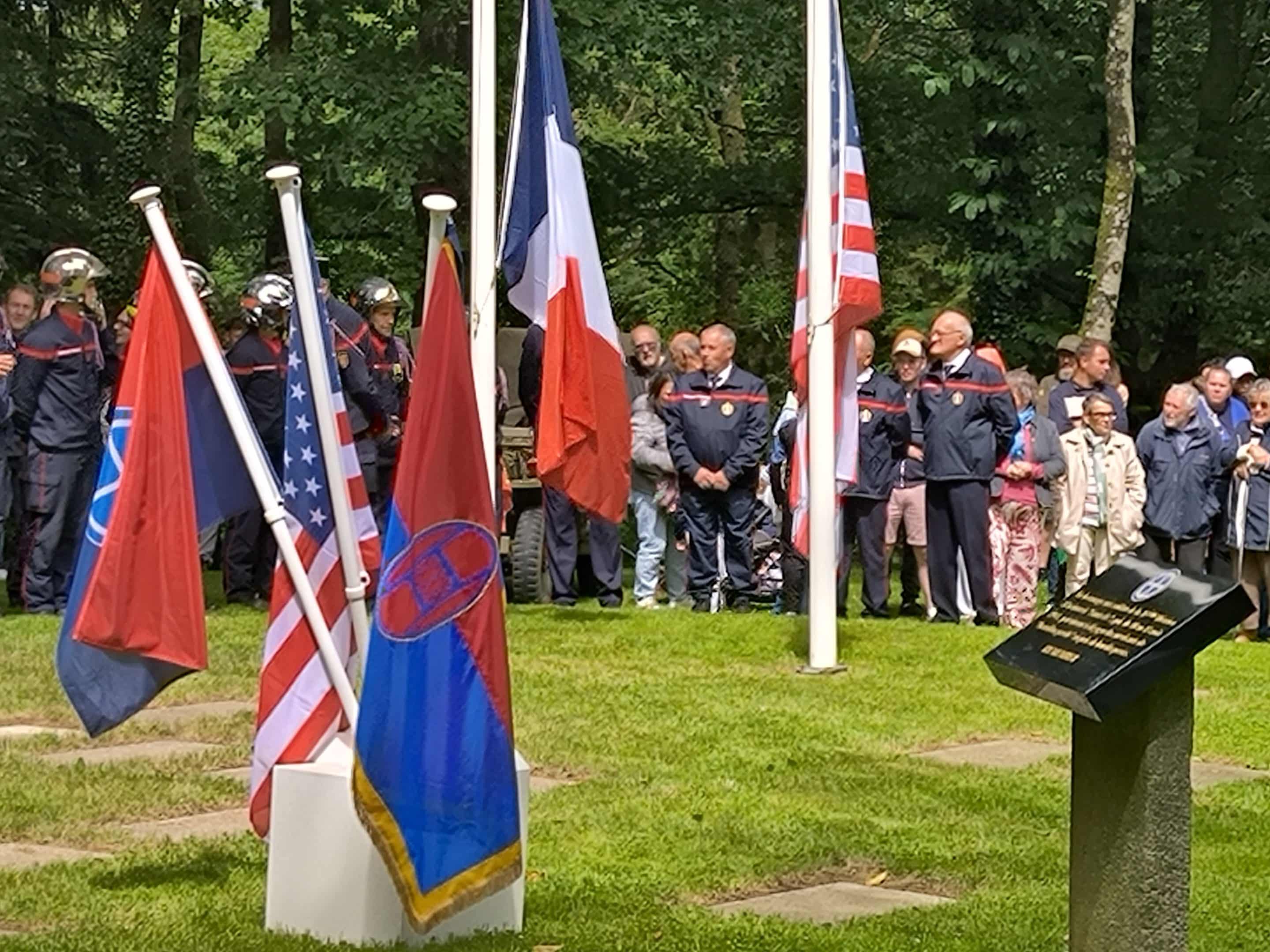
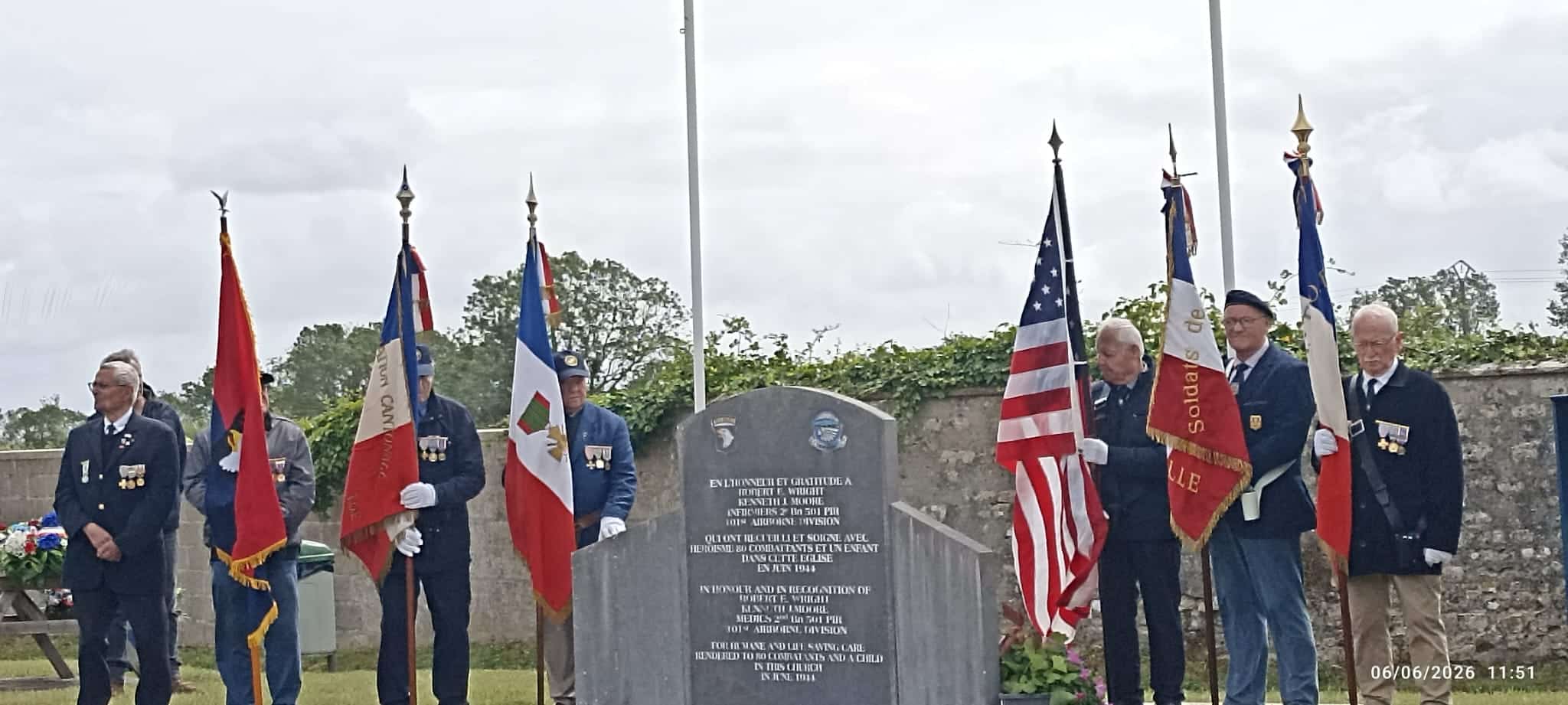
After a shared lunch at the Comète Hall, attendees participated in a formal wreath-laying ceremony at the Eisenhower Roundabout. Numerous standard bearers, regional and local officials, representatives from Les Fleurs de la Mémoire, and the HCM came together to pay tribute to the fallen.